
Water Wars Reignite: Omar Abdullah’s Comment Stirs Political Storm in Punjab
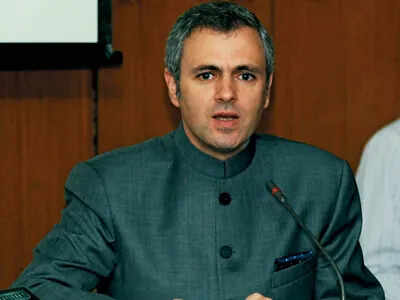
The political temperature in North India rose sharply this week, not due to any election, but because of a few carefully chosen — or perhaps carelessly delivered — words by former Jammu & Kashmir Chief Minister Omar Abdullah. His recent comments on inter-state water sharing, particularly concerning Punjab and Haryana, have stirred emotions, drawn sharp criticism, and ignited a fresh wave of debate around a decades-old issue that continues to shape the region’s politics: the Sutlej-Yamuna Link (SYL) canal and Punjab's water rights.
As the fallout continues, it raises key questions about federalism, regional identity, environmental sustainability, and the future of cooperative governance in India.
What Did Omar Abdullah Say?
Speaking at a panel discussion on national resource management, Omar Abdullah emphasized the need for a "rational and equitable" sharing of natural resources among states, citing water as a prime example. He referred to the plight of water-deficient states and implied that "those sitting on surplus cannot refuse to share in the name of emotional arguments."
Although Abdullah did not name Punjab directly, the reference was unmistakable. It was perceived as a veiled nudge toward Punjab’s long-standing resistance to sharing water with Haryana through the SYL canal — a project rooted in history, marred by violence, and unresolved for nearly five decades.
Why Did This Strike a Nerve in Punjab?
In Punjab, water is not just a resource — it is a symbol of survival, sacrifice, and identity. The state has witnessed depleting groundwater levels, overexploitation of its rivers, and falling agricultural productivity — all while continuing to feed a significant portion of India’s population. Against this backdrop, any mention of surplus water evokes strong reactions.
Omar Abdullah’s comments were quickly interpreted by Punjabi political leaders and farmer unions as "interference" and "insensitivity." Many accused him of being misinformed and politically motivated. The backlash was swift and intense.
Punjab Chief Minister Bhagwant Mann slammed the remarks, stating, “Punjab is water-deficient, not surplus. We are barely managing our own agricultural needs. Outsiders cannot lecture us on water distribution without understanding ground realities.”
Political Fallout and Reactions
The controversy quickly snowballed, drawing reactions from all major parties in Punjab:
-
Shiromani Akali Dal (SAD) called Abdullah's comments “provocative,” asserting Punjab's right to decide its own water usage without external pressure.
-
Congress leaders reminded people of their party’s historical opposition to the SYL canal, with leaders like Partap Singh Bajwa highlighting that the issue remains an emotional wound for the people of Punjab.
-
Aam Aadmi Party (AAP), in power in Punjab, used the opportunity to reaffirm its stance against the SYL project, with ministers reiterating that “not a single drop of water” will be diverted.
Even leaders from Haryana, including members of the BJP, cautiously welcomed Abdullah’s stance, using it to push their demand that Punjab be compelled to complete its portion of the canal.
The BJP, interestingly, tried to stay neutral, fearing political blowback in both Punjab and Haryana where it seeks to maintain a balancing act.
SYL Canal: A Brief Background
The Sutlej-Yamuna Link (SYL) canal was conceptualized following the reorganization of Punjab in 1966 when Haryana was carved out as a separate state. Haryana was promised a share of river water, but decades later, the canal remains incomplete. Punjab has consistently refused to build its portion, arguing that the state has no surplus water to share.
The issue has led to Supreme Court interventions, Presidential references, violent protests, and even political assassinations. Farmers, civil society, and multiple governments in Punjab have unanimously opposed the project over the years.
Why This Comment Now?
Omar Abdullah’s statement may have been made in the broader context of national water policy, but its timing is curious. With elections in Haryana approaching and a shifting political landscape in the north, many see this as a calculated comment to test waters — pun intended — and position himself or his party in national conversations.
Others speculate that Abdullah’s remarks could be part of a larger push by central authorities to revisit contentious federal issues like water sharing under the guise of national interest.
Either way, the statement has succeeded in stirring the pot and bringing the SYL debate back into the national spotlight.
Public Sentiment in Punjab
Among the people, particularly the farming community, Abdullah’s remarks have reignited fears. Many see it as a precursor to a fresh push from the Centre or neighboring states to revive the SYL project.
Farmer organizations like Bharatiya Kisan Union (BKU) have already warned of mass protests if any attempt is made to force Punjab to divert water. "This isn’t just about water — it’s about dignity, history, and justice,” one leader said at a recent gathering.
What’s Next Politically?
This incident has set the stage for several political developments:
-
Revival of Water as an Electoral Issue
The SYL issue, though dormant, could become a central talking point in upcoming elections in Punjab and Haryana. Parties will likely take firm, emotionally resonant positions to mobilize voters. -
Increased Inter-State Tensions
With Haryana adamant and Punjab defiant, the possibility of legal or executive intervention cannot be ruled out. The Centre may be forced to take a stand. -
New Demands for River Reassessment
Environmentalists and technocrats have long argued that India needs to re-evaluate its inter-state water distribution based on current availability, not decades-old projections. This controversy could reignite those discussions. -
National Debate on Federal Resource Sharing
The episode also brings into question how resources should be managed in a federal structure. Can the Centre impose decisions? Should resource-rich states bear the burden for others?
Is There a Middle Ground?
While emotions are running high, solutions must eventually emerge from dialogue. Experts have suggested alternatives:
-
Reassessment of water availability using modern data
-
Interlinking rivers with consent
-
Creating storage reservoirs in water-scarce states
-
Encouraging crop diversification in Punjab to reduce water use
But for any of this to happen, there needs to be trust — and Omar Abdullah’s comment, regardless of intent, may have only deepened the divide for now.
A Lesson in Sensitivity
Politics is as much about timing as it is about words. In a region where water is sacred and memory runs deep, even a passing comment can open old wounds. Omar Abdullah’s statement has done just that.
As Punjab pushes back with renewed vigor, and Haryana leans in with fresh expectations, the nation watches. The coming weeks will reveal whether this sparks constructive dialogue or further hardens regional stances.
But one thing is certain: water politics in India is no longer just about geography or agriculture — it's about identity, justice, and power. And once again, at the heart of it all, is Punjab.