
When Masculinity Turns Violent: How Broken Manhood Is Killing Women in Africa
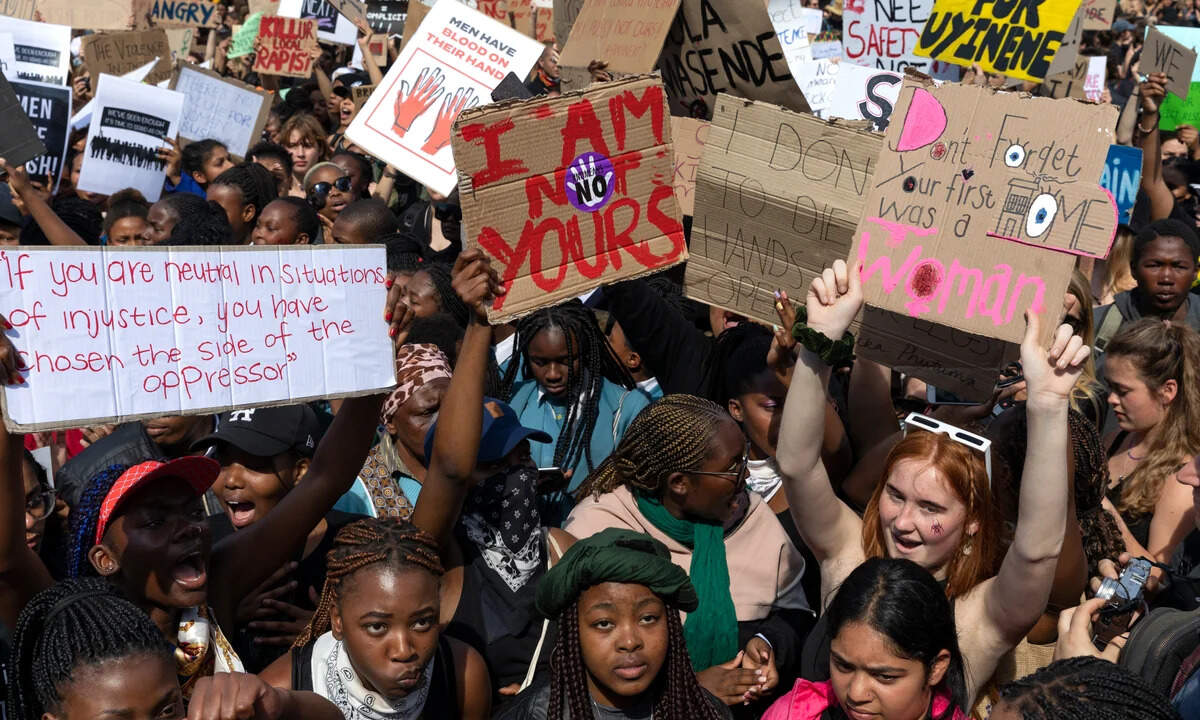
In communities across Africa — from urban centers to rural villages — women are dying, and often the root cause can be traced back to one deep, systemic issue: a broken idea of manhood.
The alarming rates of gender-based violence, domestic abuse, child marriage, sexual exploitation, and economic suppression are not random. They are symptoms of a larger cultural crisis. African manhood, as it has been shaped by history, colonization, patriarchy, and modern struggle, is cracking under pressure. And when masculinity breaks, it rarely harms the man first — it harms the woman standing closest to him.
The Myth of the “Strong African Man”
The traditional African man has been raised to be strong, silent, and dominant. He is taught that his value lies in his ability to control, to lead, and to demand respect — often at the cost of others. Emotions are repressed. Vulnerability is mocked. Power is worn like a crown, passed down from generation to generation.
He is told:
-
“A man must never cry.”
-
“You are the head of the household.”
-
“A woman must submit.”
But this performance of masculinity is not strength — it's a fragile façade. It creates men who feel lost when they can’t find work. Men who feel threatened by independent women. Men who don’t know how to ask for help, but know how to raise their fists. In this framework, masculinity becomes a constant struggle for dominance, and any loss of control becomes an attack on identity.
Colonial Trauma and Cultural Confusion
Colonialism did more than loot Africa’s resources — it rearranged gender roles and disrupted traditional African identities. Pre-colonial societies had complex, often more balanced systems of gender, where women were traders, landowners, spiritual leaders, and even warriors.
Colonial rule enforced European ideals of male supremacy and control, embedding hierarchies and suppressing female agency. Post-independence, many nations embraced those same systems under the guise of tradition.
Now, young African men grow up torn between:
-
Old customs that demand dominance
-
Modern pressures that demand sensitivity
-
Economic realities that make dominance difficult
In this storm of expectation and frustration, some men turn violent — not because they are inherently violent, but because they have no blueprint for healthy masculinity.
The Cost Women Pay
When men feel powerless, it is often women who absorb the consequences. Across the continent:
-
Women are blamed for infertility, even when medical science proves otherwise.
-
Marital rape is rarely acknowledged and often excused as “a wife’s duty.”
-
Girls are pulled out of school so they don’t become “too opinionated.”
-
Victims of rape are shamed while their abusers walk free.
This is not just a women's rights issue. It is a men’s issue. A cultural issue. A societal crisis.
Every time masculinity is defined by control instead of compassion, women bleed. Sometimes emotionally. Sometimes physically. Sometimes to death.
Broken Men Raising Broken Boys
The cycle continues in how boys are raised. In many homes, young boys are taught entitlement early:
-
The boy is served first.
-
The boy is not asked to clean.
-
The boy is told he will be the “man of the house.”
He is taught that women exist to serve, not to lead. That discipline equals aggression. That “manhood” is earned through intimidation, not integrity.
Without intervention, this boy becomes another man who doesn’t know how to express pain except through violence or silence. He becomes another partner who doesn’t understand consent. Another father who cannot nurture. Another abuser who doesn’t even realize he’s one.
What Real Strength Looks Like
The time has come to redefine African manhood — not by Western models, but by building a new understanding rooted in emotional strength, accountability, and equality.
Real strength is:
-
Listening without defensiveness
-
Loving without dominance
-
Providing without control
-
Leading with empathy
A strong African man is one who knows that equality doesn’t threaten him — it elevates everyone.
We must celebrate men who are raising daughters to be leaders, who cook and clean without shame, who protect women without needing to own them. We must normalize therapy, emotional literacy, and vulnerability in male spaces.
Rebuilding Through Education and Conversation
The solution is not simple — but it begins with unlearning. Families, schools, religious institutions, and governments must play a role in reconstructing the idea of what it means to be a man.
In Schools:
Curriculums must include gender education, consent, and emotional intelligence. Boys should be taught to respect boundaries and to see girls as equals, not rivals.
In Homes:
Fathers must show sons that care is not weakness. Mothers must stop excusing bad behavior with “boys will be boys.”
In Communities:
Religious leaders, chiefs, and elders must use their influence to promote healthy masculinity, not toxic patriarchy. Culture must evolve — not as a betrayal of tradition, but as its preservation.
A Shared Responsibility
This isn’t about blaming men — it’s about challenging a broken system that hurts everyone. Many African men are already doing the work, standing up, speaking out, and healing. But they need support, not ridicule. Change will not come from shame — it will come from shared responsibility.
Women have carried the burden of broken masculinity for too long. It's time for men to carry the work of fixing it. Not alone, but together.
Manhood Reimagined
African manhood is not beyond repair — but it needs radical transformation. A reawakening. A return to strength defined by kindness, respect, and shared power.
Because until African men are free from toxic expectations, African women will never be truly safe.