
Ink of the Ancients: India's Artistic Path from Nature to Nirvana
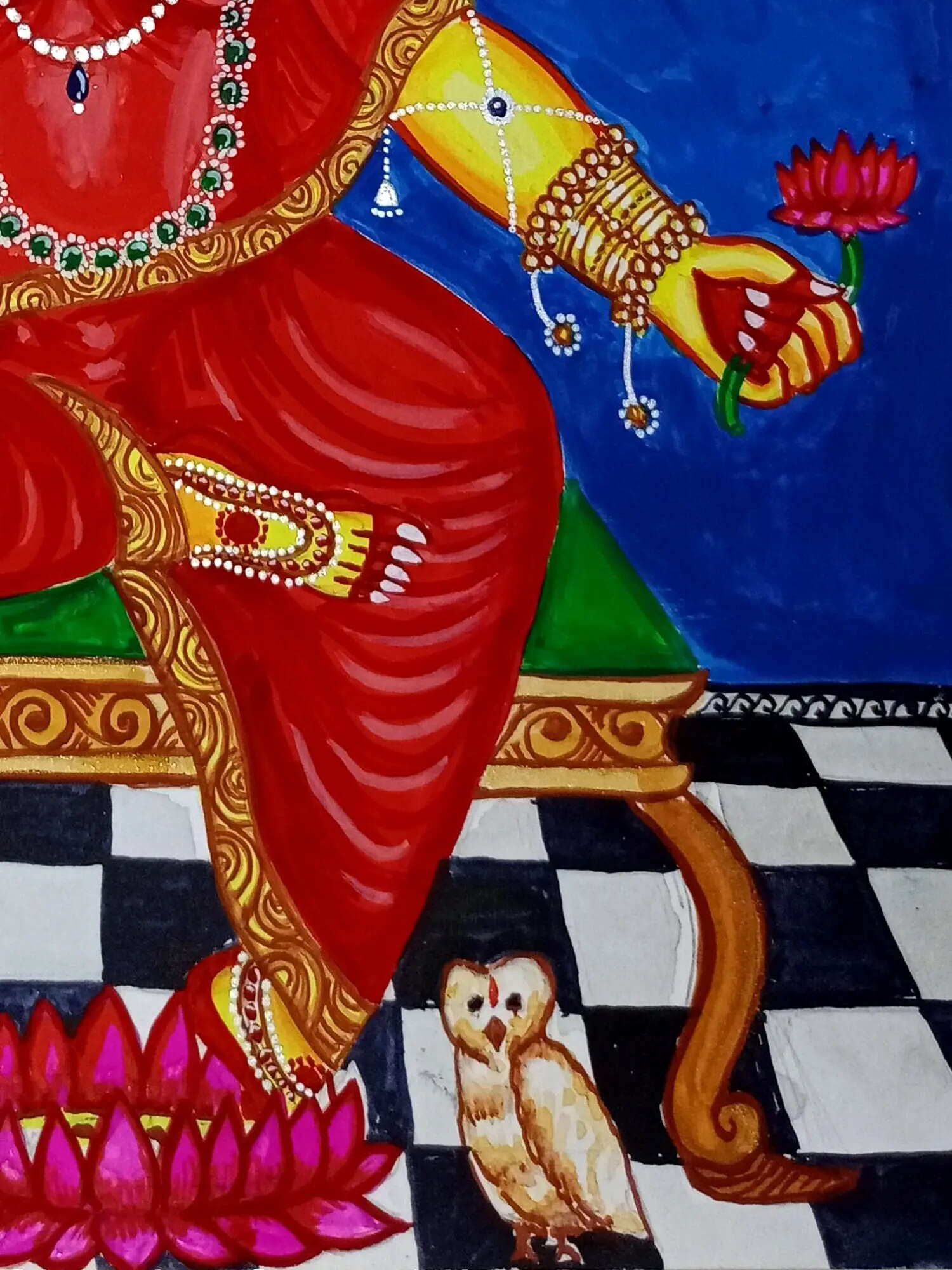
India, a land steeped in mythology, philosophy, and profound spiritual heritage, has long expressed its inner world through art. From mysterious serpentine symbols painted on cave walls to majestic stone-carved saints meditating in temples, Indian spiritual art tells a story not just of devotion, but of civilization's evolving consciousness. It is not merely decoration or ritual — it is revelation, narrative, and transcendence captured in visual form.
The journey from serpents to saints reflects India’s movement through time — from ancient tribal cults to highly developed systems of spirituality. It shows how the sacred has been continuously visualised, reimagined, and shared, giving birth to one of the world’s richest traditions of religious and symbolic art.
The Serpent: Symbol of Fear and Divinity
In Indian spiritual art, the serpent (nāga) is one of the most enduring and paradoxical symbols. Associated with both fear and protection, death and rebirth, the snake first appears in prehistoric cave drawings and later becomes central in Hindu, Buddhist, and Jain iconography.
In early tribal communities, the snake was seen as a powerful force of nature — mysterious, dangerous, but sacred. As religious thought evolved, so did the symbolism. The nāga became a protector of treasures, guardian of water sources, and a symbol of fertility and regeneration.
In Hinduism, Lord Vishnu is depicted reclining on the multi-headed serpent Sheshanaga, floating in the cosmic ocean. In Buddhism, the nāga Mucalinda is shown sheltering the meditating Buddha from rain and storm. Far from being a demon, the serpent became a sacred ally of the divine.
Art from early centuries — carved into cave temples at Ajanta, Ellora, and Badami — often shows intertwined serpent motifs coiled around pillars, gateways, and deity halos, reflecting a mystical connection between the earth and the cosmos.
Tribal Roots and Folk Spirituality
Before grand temples and detailed iconography, Indian spiritual art thrived in folk and tribal expressions. The Warli, Bhils, Gonds, and other indigenous communities painted gods, spirits, animals, and ancestors on mud walls, leaves, and rocks.
These were not ornamental works — they were visual prayers, meant to invoke rains, fertility, protection, and ancestral blessings. The circle of life, the harmony between man and nature, and the belief in unseen forces dominate these artworks.
Folk deities were often depicted as hybrid beings — half-animal, half-human — showing how early spirituality embraced fluid forms and symbolic shapes. The serpent, tree, sun, and moon were recurring themes, depicted not with realism but with spiritual intuition.
Even today, tribal art forms like Madhubani, Pattachitra, and Gond art continue to blend the earthy with the divine, preserving the animistic roots of Indian spirituality.
Rise of Deity Worship and Temple Art
As Hinduism formalised around epic narratives like the Ramayana and Mahabharata, and as Vedic rituals evolved into Bhakti traditions, spiritual art began to reflect more personified deities — gods with names, faces, attributes, and emotions.
Artists created murti (idols), not as static objects but as living vessels of the divine. A murti wasn’t merely a sculpture — it was believed to be imbued with prāṇa (life-force) during consecration. This belief made temple sculpture and painting a deeply spiritual act.
In temples across South and North India, walls became canvases to narrate the lives of saints, stories of gods, and cosmic events. From Chola bronzes of Nataraja to Jagannath idols of Puri, each form reflected a theological idea — dance as creation, eyes as consciousness, form as formlessness.
Artists followed precise iconographic rules (shilpa shastras), yet brought individuality and regional aesthetics into play. The result was a diverse but unified visual language of spiritual experience.
Jain and Buddhist Spiritual Minimalism
While Hindu art celebrated form and narrative, Jain and Buddhist traditions introduced a more introspective visual style. In early Buddhist art, the Buddha was initially represented aniconically — through footprints, trees, wheels — reflecting the idea of non-attachment and the challenge of depicting the enlightened.
Later, as Mahayana Buddhism spread, grand statues of Buddha emerged — serene, symmetrical, and filled with a spiritual stillness. Caves at Sanchi, Ajanta, and Sarnath show a blend of narrative frescoes and meditative postures, illustrating both the Buddha’s teachings and his transcendence.
In Jain art, saints (Tirthankaras) are portrayed in highly stylised, meditative poses — often identical across works, emphasizing detachment, sameness, and inner purity. The lack of ornamentation and emotional expression is intentional — the art aims not to evoke emotion but to inspire detachment and clarity.
The Bhakti Movement: Saints Take Center Stage
From the 8th century onward, the Bhakti movement brought a revolutionary wave across Indian spiritual art. Saints, previously seen as humble devotees, now became central figures. Poets like Mirabai, Kabir, Basava, and Tukaram began appearing in paintings and murals — often singing, dancing, or in deep communion with their chosen deity.
This was a dramatic shift — from gods looking down on humans, to saints becoming the bridge between heaven and earth. Spiritual art became more personal, emotional, and expressive. Murals in temples began to depict Radha and Krishna in love, Ramdevji riding a horse, or Sant Dnyaneshwar meditating under a tree.
The divine was no longer remote; it was accessible, human, and intimate — and so was the art.
Islamic Influence and Sufi Spirituality
With the advent of Islam, Indian art absorbed new aesthetic styles — geometry, calligraphy, and abstract expression. While Islamic tradition discouraged idol imagery, it introduced rich decorative and spiritual symbolism.
Sufi traditions, in particular, brought spiritual mysticism into Indian art through architecture, poetry, and abstract patterns. Dargahs (Sufi shrines) became spaces filled with sacred geometry, floral motifs, and glowing lamps — representing light, divine love, and surrender.
This syncretic influence enriched Indian spiritual art — creating hybrids like Indo-Islamic architecture, where lotus motifs exist alongside Quranic verses, and where sacred space is created not through form, but through ambience and rhythm.
Colonial Impact and Modern Interpretations
Colonial rule introduced realism, perspective, and Western styles to Indian artists. Spiritual art, during this time, was both suppressed and reinvented.
Artists like Raja Ravi Varma combined European realism with Hindu mythology, creating iconic images of gods and saints that became popular across calendars and homes. Post-independence, artists like Nandalal Bose, S.H. Raza, and M.F. Husain reinterpreted Indian spirituality through abstract, modern, and deeply personal lenses.
Today, spiritual art is found not only in temples but in urban galleries, digital media, street murals, and fashion. Artists are once again exploring the symbols of serpents, saints, chakras, and gods, not as fixed traditions but as evolving inner experiences.
An Eternal Dialogue Between Form and Spirit
From primal cave drawings to contemporary canvases, India’s spiritual art has never been just about religion. It has been about identity, memory, transcendence, and the eternal human quest for meaning. The serpent and the saint, seemingly opposite, are part of the same story — of life’s dangers and its divinity, of struggle and surrender.