
The Euro’s Quiet Champion: Hans-Dietrich Genscher’s Role in Europe’s Single Currency
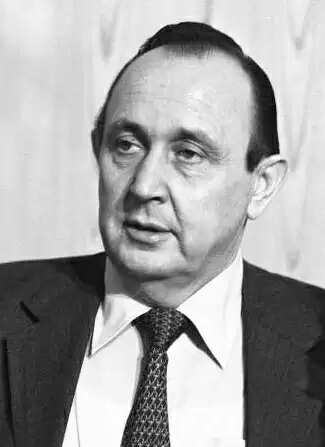
When historians recount the story of the euro — Europe’s bold leap toward monetary unity — names like Helmut Kohl, François Mitterrand, and Jacques Delors usually dominate the conversation. But quietly, persistently, and often behind the scenes, Hans-Dietrich Genscher was shaping that future long before it seemed politically possible.
Often overlooked in mainstream accounts, Genscher, Germany’s long-serving Foreign Minister and Vice-Chancellor, played a subtle but significant role in the creation of the European single currency. More than a politician, he was a diplomat of extraordinary foresight, someone who believed that political unity and economic cooperation in Europe were not only desirable, but essential.
This is the story of how one man, often cast in the shadow of louder personalities, helped lay the intellectual and political foundation for the euro — and in doing so, changed Europe forever.
The Early Vision: From Division to Unity
Hans-Dietrich Genscher was born in 1927 in the German state of Saxony. His life spanned some of the most turbulent chapters in European history — World War II, the Cold War, the fall of the Berlin Wall. These events shaped his deep commitment to European integration.
As a liberal politician and a senior figure in the Free Democratic Party (FDP), Genscher saw firsthand the dangers of nationalism, militarism, and economic fragmentation. For him, a united Europe wasn’t just a political project; it was a peace project.
Unlike some contemporaries, Genscher viewed European unity through the dual lens of security and economic stability. He believed that a shared currency could become both the symbol and substance of this unity.
The Diplomat's Path: Quiet Influence in a Noisy Europe
Throughout the 1970s and 1980s, Genscher emerged as one of Europe’s most skilled diplomats. Known for his measured tone, sharp intellect, and unwavering pragmatism, he often acted as a bridge between competing interests — East and West, left and right, large states and small.
His commitment to European integration never wavered, even during times of economic turmoil or political backlash. While many politicians focused on national interests, Genscher kept returning to one question: What will bring Europe together permanently?
In many of his speeches and diplomatic engagements, he subtly championed monetary union. He argued that a common currency would not only simplify trade but also create a shared destiny — one where member states would be bound together not just by treaties, but by their wallets and economic interests.
Paving the Road to Maastricht
The formal blueprint for the euro came in the Maastricht Treaty of 1992, but its foundation was built over decades of political negotiations, financial debates, and ideological compromises. Genscher was a key architect of that foundation, often working behind the scenes to build consensus and reduce resistance.
One of his most significant contributions was persuading German political elites — and crucially, the Bundesbank — that monetary union was in Germany’s long-term interest. At a time when the Deutsche Mark was a symbol of national pride and economic strength, this was no easy task.
Genscher used his influence to calm fears that a single currency would threaten German stability. Instead, he framed the euro as an extension of German responsibility, a way to share economic leadership with Europe while preventing future divisions.
His persuasive powers helped shift public opinion and bring reluctant policymakers to the table.
A Reunified Germany, A Reimagined Europe
The fall of the Berlin Wall in 1989 and the subsequent reunification of Germany raised new questions about power, identity, and European stability. Some leaders feared a resurgent Germany might dominate the continent economically and politically.
Genscher saw this as an opportunity to deepen European ties. Rather than assert German dominance, he advocated using the moment to commit Germany even more deeply to the European project — with a single currency as the glue that could hold it all together.
He argued that reunification must go hand-in-hand with integration, and this message reassured neighboring countries. His diplomacy ensured that Germany’s return to full strength did not come at the cost of European harmony.
In this way, Genscher helped turn a potentially divisive moment into one of unprecedented unity — one that laid the political groundwork for the euro’s eventual launch in 1999.
The Genscher Touch: Diplomacy, Not Declarations
Unlike other leaders who were known for grand visions and powerful speeches, Genscher’s style was incremental, steady, and understated. He believed in building institutions, not headlines.
His diplomacy didn’t involve forcing change, but guiding consensus, even among adversaries. Whether it was easing Cold War tensions or negotiating economic reforms, Genscher understood that lasting solutions required patience and precision.
This same approach shaped his role in the early days of the Economic and Monetary Union. While others clashed over convergence criteria and central bank independence, Genscher was quietly aligning interests, removing obstacles, and pushing the idea forward when others saw it as unrealistic.
Why He’s Often Overlooked
Despite his central role, Genscher’s name rarely appears in popular narratives of the euro’s origin. There are several reasons for this:
-
He was not a head of state, and thus lacked the global spotlight.
-
He preferred subtle diplomacy over bold declarations.
-
His work was often behind the scenes, making him less visible to the public eye.
But make no mistake — without Hans-Dietrich Genscher, the euro may have taken longer to arrive, or arrived in a very different form.
Legacy: The Quiet Builder of Europe
Genscher passed away in 2016, but his legacy lives on in every euro coin and banknote, in every cross-border transaction, and in the political architecture that holds the EU together.
He is a reminder that history is not only shaped by loud voices, but also by the careful hands of those who build bridges in silence.
In an age where politics often rewards the loudest voice in the room, Genscher’s life teaches us the value of diplomacy, patience, and vision. His contributions to European unity — especially the single currency — are a testament to what can be achieved when ego takes a back seat to purpose.
A Vision Fulfilled, A Name Remembered
The euro did not emerge overnight, and it did not come from one leader’s vision alone. It was the result of decades of work, dialogue, and compromise. And in that long journey, Hans-Dietrich Genscher was a compass — guiding, balancing, and quietly shaping Europe’s future.
Today, as Europe faces new challenges — from economic uncertainty to political fragmentation — the lessons of Genscher’s life feel more relevant than ever.