
Pakistan Endorses Trump, But He Says Nobel Is Out of Reach
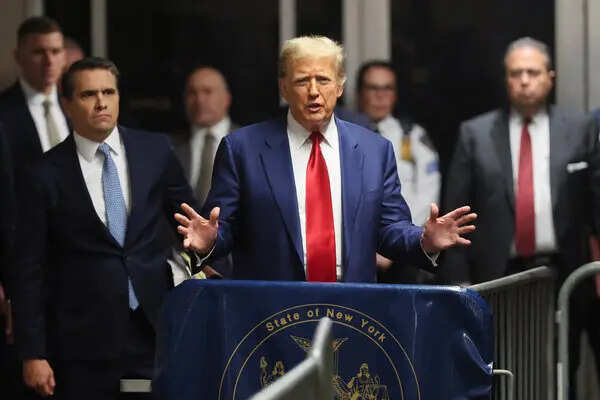
In a world where diplomacy and optics shape legacy as much as policy, the Nobel Peace Prize continues to be one of the most coveted honors in international affairs. Former U.S. President Donald Trump, known for his brash style, unconventional diplomacy, and deeply polarizing rhetoric, has once again entered the conversation — this time, not through nomination by an American body, but through a recommendation by Pakistan.
Yet, in true Trump fashion, the moment is laced with both irony and frustration. Despite the foreign endorsement, Trump has publicly declared that he believes he will never receive the Nobel Peace Prize, “no matter what I do.”
This statement, characteristically blunt and reflective of Trump’s combative relationship with global institutions, has once again stirred debate. Is the Nobel Peace Prize truly impartial? Has Trump been unfairly excluded from recognition? Or is his sense of injustice another example of his craving for validation?
Let’s unpack the layers behind this moment — the recommendation, Trump’s reaction, and the broader politics of peace and prestige.
Pakistan's Unlikely Endorsement
In the world of diplomacy, Pakistan's recommendation of Donald Trump for a peace prize is surprising to many. Historically, U.S.-Pakistan relations have been inconsistent, with alternating phases of cooperation and conflict, especially around issues of counterterrorism, Afghanistan, and regional security.
Trump's presidency witnessed both tough rhetoric and unexpected collaboration with Pakistan. He began with strong criticism, accusing Pakistan of harboring militants and cutting aid. But later, his administration worked closely with Islamabad to facilitate the Afghanistan peace talks and U.S. troop withdrawal from the region.
In that context, Pakistan’s gesture appears to be a nod toward Trump’s role in reducing American military presence in Afghanistan — a development that, at least momentarily, pointed toward de-escalation in a war-torn region. Whether motivated by genuine appreciation or strategic signaling, the move was headline-worthy.
Trump’s Response: Cynical but Consistent
Donald Trump’s reaction was not one of gratitude or humility, but rather a blend of sarcasm and resignation. Declaring that he would never receive the Nobel Peace Prize “no matter what I do,” he painted himself as a victim of bias — a familiar narrative in his political repertoire.
For Trump, this isn’t the first time he’s expressed frustration over the prize. In the past, he has repeatedly mentioned how others, including his predecessors, were honored for far less. The former president often refers to the Nobel awarded to Barack Obama in 2009, saying it was given “too early,” implying his own achievements far surpassed it.
Trump’s comments reflect a belief — held by many of his supporters — that international institutions are politically motivated, and unfairly biased against populist, nationalist figures like himself.
Trump’s Case for the Prize
Objectively speaking, Trump has had moments during his presidency where he played a central role in diplomatic negotiations:
-
His administration brokered normalization deals between Israel and several Arab states (Abraham Accords).
-
He negotiated directly with North Korean leader Kim Jong-un, the first sitting U.S. president to do so.
-
He pushed for troop withdrawal from long-standing conflict zones, including Afghanistan and parts of Iraq and Syria.
Supporters argue that these efforts — particularly the Abraham Accords — represent significant steps toward regional peace and merit consideration for the Nobel Peace Prize.
However, critics point out that many of these agreements were fragile, incomplete, or short-lived. Moreover, Trump’s broader foreign policy — often seen as erratic, aggressive, or unilateral — has drawn skepticism from traditional allies and global observers.
The Politics of the Nobel Peace Prize
The Nobel Peace Prize has always been a blend of idealism and politics. While it aims to recognize individuals or organizations that promote peace, the decision is inevitably influenced by global narratives, moral symbolism, and timing.
There have been controversial recipients and even more controversial omissions. Leaders such as Mahatma Gandhi were never awarded the prize, while others received it amid active conflicts or before their long-term impact could be judged.
Given that context, Trump’s suspicion isn’t without precedent. The question is: does his exclusion stem from political bias, moral evaluation, or simply the nature of his diplomacy, which often lacked the subtlety and consensus-building Nobel panels tend to favor?
Public Reaction and Divided Opinions
Trump’s remarks, like most of his statements, generated mixed responses.
-
Supporters agreed with his sentiment, claiming that elite global institutions continue to resist recognizing Trump’s achievements due to ideological bias.
-
Critics argue that Trump’s abrasive leadership style, including pulling out of climate accords, weakening NATO, and alienating traditional allies, runs counter to the values of peace and cooperation the Nobel Prize stands for.
Social media was flooded with debates, memes, and passionate defenses or denunciations of Trump’s worthiness.
For some, the Nobel Prize is tarnished when awarded too politically. For others, Trump’s brand of diplomacy — transactional, aggressive, and divisive — is incompatible with the spirit of the prize, regardless of the results.
Legacy, Recognition, and the Trump Doctrine
Beyond the Nobel conversation, Trump’s comments tap into a deeper truth about his presidency: he craves recognition — not just from voters or media, but from history.
Trump’s foreign policy was, in many ways, a break from decades of American strategy. He embraced direct dialogue with adversaries, prioritized domestic interests over global leadership, and favored deals over long-term commitments. This approach, often dubbed the “Trump Doctrine,” was deeply controversial but undeniably distinct.
The Nobel Peace Prize — symbolic, prestigious, and historically significant — would serve as a stamp of legitimacy on that legacy. The fact that he likely won’t receive it, despite foreign recommendations or diplomatic achievements, only intensifies his sense of betrayal by the global establishment.
What Comes Next?
As Donald Trump campaigns for another shot at the presidency, his commentary on the Nobel Prize is more than personal frustration. It is a strategic message to his base: that he remains an outsider, fighting against a global elite that refuses to acknowledge his success.
The Pakistan endorsement is unlikely to change the Nobel Committee’s course. But it has handed Trump fresh ammunition for his broader narrative — that true merit is often denied to those who challenge the system.
Whether or not he ever receives a Nobel, Trump has once again managed to center himself in the international conversation, blur the lines between diplomacy and drama, and provoke the world into yet another round of polarized reflection.
The Nobel Peace Prize is not awarded for ego, popularity, or even momentary achievements. It’s given for enduring contributions to peace and humanity. Whether Donald Trump qualifies is up for debate — and will likely remain so.
But one thing is certain: his belief that “they’ll never give it to me, no matter what I do” reveals more than disappointment. It underscores a worldview that sees recognition as selective, institutions as biased, and legacies as things that must be fought for, not gifted.
And in that battle for validation, Trump is, once again, exactly where he wants to be — at the center of the world’s attention.